Golden Ocala vs Communities: Which Ocala Lifestyle Fits?
November 21, 2025
November 21, 2025
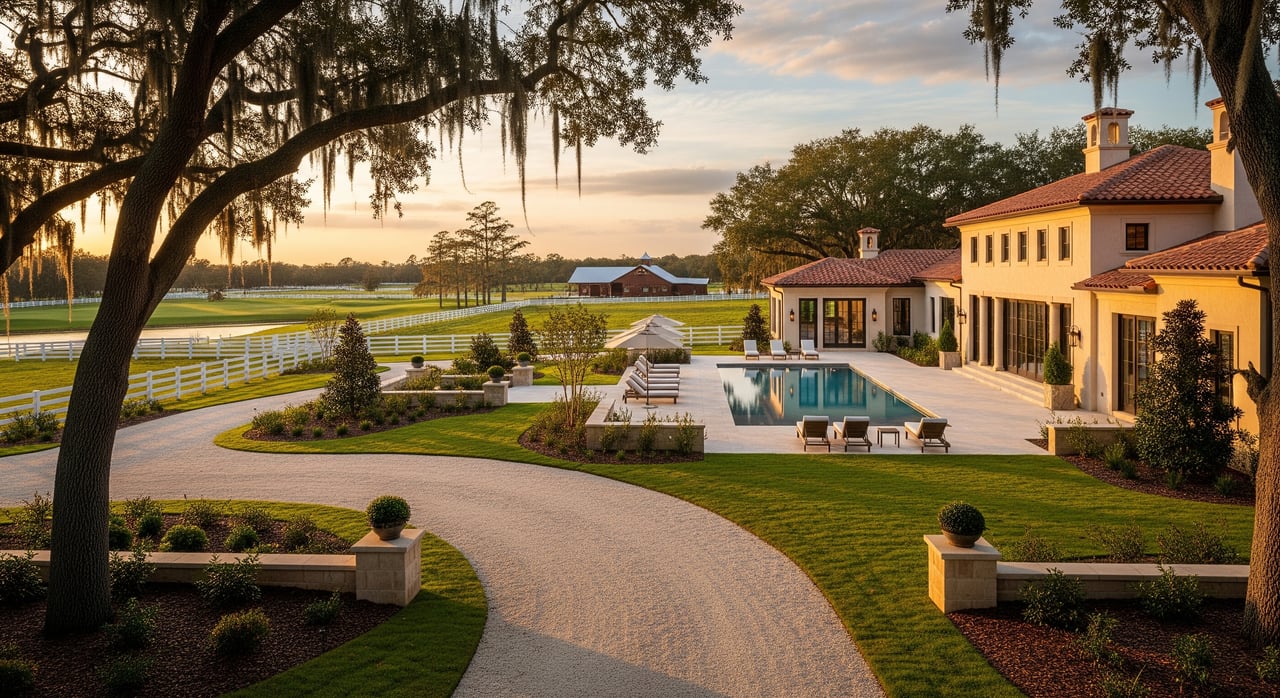
Trying to choose between the Golden Ocala lifestyle and other nearby communities can feel like comparing apples to thoroughbreds. You want the right blend of golf, equestrian access, privacy, and convenience, without surprises after you close. In this guide, you’ll learn how Golden Ocala typically stacks up against other gated golf and equestrian options in Marion County, what membership details to verify, and how to plan a smart, private tour. Let’s dive in.
Ocala and greater Marion County are a nationally recognized hub for Thoroughbred breeding and training, with a deep ecosystem of veterinarians, farriers, feed suppliers, and trainers. If you want serious equestrian support close to home, this is your arena. You also have several private and semi‑private golf options nearby, from club‑centered neighborhoods to standalone estates.
For travel, buyers often weigh drive times to major airports. From Ocala, Orlando International is roughly 1 to 1.5 hours, and Gainesville Regional is typically under an hour, depending on traffic. The I‑75 corridor provides convenient regional access. Florida has no state income tax, and property taxes vary by parcel. Insurance costs can be influenced by wind and flood factors, so plan to check parcel‑specific flood zones and coverage options during due diligence.
Golden Ocala is known as a private, club‑style community in Ocala that blends golf and an equestrian lifestyle with a centralized amenity campus. While you should confirm exact features, fees, and policies directly with the club and current MLS data, the comparison below shows how Golden Ocala commonly aligns against other choices.
| Category | Golden Ocala | Club‑style gated golf communities | Private equestrian estates (non‑club) | Nearby country‑club golf communities |
|---|---|---|---|---|
| Membership model | Typically structured club membership; confirm equity vs non‑equity and tiers | Often tiered, may be equity or non‑equity | No club membership; private ownership rules | Usually tiered golf or social memberships; verify if optional |
| Amenities focus | Integrated golf, dining, fitness, security, and access to equestrian elements | Golf‑centric with clubhouse, fitness, racquet sports | Maximum privacy, barns and arenas by owner design | Golf and social focus, some fitness and pool offerings |
| Property types | Golf‑view homes, custom estates, possible village formats | Golf‑course homes, villas or condos | Country estates with barns, arenas, large turnout | Golf‑course single‑family homes and villas |
| Approximate price bands | Vary by lot and home; many club homes range from mid to high six figures into multi‑million for custom estates | Similar range, often mid six figures to multi‑million | Wide range, often $1,000,000 to $5,000,000+ for large equestrian estates | Often $500,000 to multi‑million for golf‑view homes |
| Lot sizes | Club‑oriented lots; confirm equestrian allowances per parcel | Moderate lots fit for low‑maintenance living | Larger acreage for barns, paddocks, trails | Moderate lots, limited equestrian capability |
| Equestrian capacity | Access to equestrian lifestyle; confirm on‑site options and rules | Limited or none; off‑site boarding typical | Full private control of barns, turnout, arenas where permitted | Generally none; off‑site equestrian options |
| Golf access | Member access with club rules and tee‑time policies | Member access; verify restrictions and tournaments | Off‑site public or private courses | Member access; verify policies |
| HOA and dues | Master HOA plus possible village HOAs and club dues | HOA plus club dues where applicable | Often no HOA; agricultural rules and county zoning apply | HOA plus club dues where applicable |
| Privacy and acreage | Gated with security, moderate privacy inside a club | Gated with managed access | Maximum privacy depending on acreage and siting | Gated or controlled access, neighborhood setting |
| Ideal buyer profile | Combination buyer who values both golf and equestrian lifestyle in a managed setting | Golf‑and‑social buyer who wants turnkey club life | Dedicated equestrian owner prioritizing barns, turnout, and flexibility | Golf‑and‑social buyer in a traditional club neighborhood |
For current availability, pricing, and exact membership details, request the latest club packet and MLS comps before touring.
If your day revolves around your horses, private estates outside club gates often give you the barn capacity, turnout acreage, and training flexibility you need. You trade shared amenities for more control over layout, footing, and daily routines. Confirm zoning for any commercial activity, such as boarding or training.
If you want a walkable clubhouse scene, dining, and predictable tee‑time access, a club‑style gated community can be a great fit. You get managed amenities, security, and a neighborhood experience. Membership details vary, so verify initiation, dues, and any food and beverage minimums.
If you want both quality golf and true equestrian functionality, options narrow. You may find what you want inside a club that supports equestrian access, or you might pair a golf‑centric home with off‑site boarding or a second parcel. Stay flexible on acreage, proximity, and barn size to make both lifestyles work.
Membership structure drives your day‑to‑day experience and total cost of ownership. Before you fall in love with a home, request the current membership packet and fee schedule in writing. Review these items closely:
A short call with the membership office can clarify waitlists, reciprocity with other clubs, and visit rules during home tours.
When horses are part of the plan, walk properties with an equine lens. Bring your trainer or advisor if possible.
Plan for a one‑time initiation fee, ongoing dues, and possible capital contributions at closing. Add food and beverage minimums, cart or storage fees, and any equestrian boarding or stall charges if available. Ask for recent special assessments and reserve status.
High‑end custom homes and non‑standard properties can require specialized lending. Equestrian improvements like barns and arenas benefit from appraisers who understand equine value drivers. If you plan to finance, work with lenders who regularly handle luxury, club, or rural properties.
Build a budget for parcel‑specific property taxes, HOA and club dues, home and wind insurance, and flood insurance where applicable. For equestrian estates, add barn and arena upkeep, grounds maintenance, utilities, and irrigation costs. These line items vary widely by property size and amenities.
Resale can be influenced by membership transferability, club demand, and the breadth of your property’s appeal. Equestrian improvements are valuable to horse owners, but consider how convertible they are for future buyers. Monitor local luxury comps and days on market to time your move.
A little structure goes a long way when you only have a few days on site.
Ready to see how your lifestyle fits in Ocala? For curated tours, equestrian‑savvy guidance, and confidential strategy, connect with Alyssa Pascucci for a concierge experience.
Stay up to date on the latest real estate trends.
We bring a passion for equestrian living and years of real estate expertise to guide buyers, sellers, and investors with unmatched dedication. With a background in luxury markets, construction knowledge, and international experience, we understand the unique needs of every client. Based in Ocala’s Whispering Oaks Farm, we are ready to help you find your perfect property near the World Equestrian Center and beyond.