Leave a Message

Thank you for your message. We will be in touch with you shortly.

Explore Our Properties

Horse Farm Due Diligence Guide For Anthony Buyers

March 5, 2026

Are you eyeing a horse property in Anthony and wondering how to separate a great farm from a costly project? You are not alone. Even experienced equestrians can miss parcel-specific rules, flood risks, or septic details that change the math fast. This guide gives you a clear, local due diligence path so you can tour with confidence, ask the right questions, and avoid surprises. Let’s dive in.

Start with maps and records before you tour

Do a document sweep first so your site visit is focused and efficient.

  • Pull the parcel record in the Marion County Property Appraiser to confirm acreage, legal description, and any agricultural classification on file. Use the owner contact to request disclosures and records. Start with the county’s online search through the Marion County Property Appraiser.
  • Open county GIS maps to review zoning, Future Land Use, recorded easements, flood zone, wetlands, and road type. Print parcel and flood layers to bring on site. Use the Marion County GIS and maps portal.
  • Check building and code history for barns, arenas, and driveways in Civic Access. Note permits, open cases, and any red tags. Begin at the county’s Building Permits and Inspections portal.
  • Print a FEMA flood panel (FIRMette) for the property so you can verify barn and home elevations on site. Use the FEMA Flood Map Service Center.
  • Confirm whether the property is inside a septic-to-sewer project area and if any connection may be mandatory on a timeline. Review details at Marion County Utilities septic-to-sewer projects.
  • Ask for the title commitment early. Look for recorded easements, access agreements for private roads, and any covenants that affect horse-keeping or commercial use.

Bringing these printouts to your showing makes it easy to confirm usable acres, spot encroachments, and validate what you see on the ground.

Know the Marion County horse-density rules

Before you fall in love, verify how many horses the county allows on that parcel. Marion County limits horse density in certain residential and rural zoning districts. The Land Development Code specifies 9,000 square feet for the first horse, 6,000 square feet for each additional horse, and a maximum of four horses per acre, depending on zoning. Always confirm the exact zoning class and any overlays that apply to your property in the Marion County Land Development Code.

On-site evaluation: what to look for

Bring a 50-foot tape, camera, GPS-enabled phone, and a notepad. Photograph and label everything.

Pastures and paddocks

You buy usable acres, not just total acres. Walk each field and count the acres that are high and dry. Exclude wooded edges, wet pockets, and narrow fence rows. Cross-check your field estimates against your printed parcel maps from the county GIS.

For stocking rate, UF/IFAS suggests that in central Florida, typical bahiagrass pastures support roughly 2 to 2.5 acres per mature horse. More productive bermudagrass or winter forage rotations can bring that closer to about 1 to 1.5 acres per horse, depending on management. Review UF/IFAS guidance in the stocking rate and forage overview, then tailor it with local soils and a grazing plan.

Request any recent soil tests. UF/IFAS recommends testing every 2 to 3 years. If none are available, plan to take composite soil samples by paddock during the inspection period. Note any compaction, bare patches, or seasonal standing water.

Fencing, gates, and layout

Check that primary turnout fencing is horse-safe and visible, with adequate height and solid corners. Confirm gate hardware, hinge condition, and that you have handling lanes for rotational grazing. Avoid barbed wire in main horse areas. If fences sit near roads, confirm sight lines at entry points.

Barn layout and condition

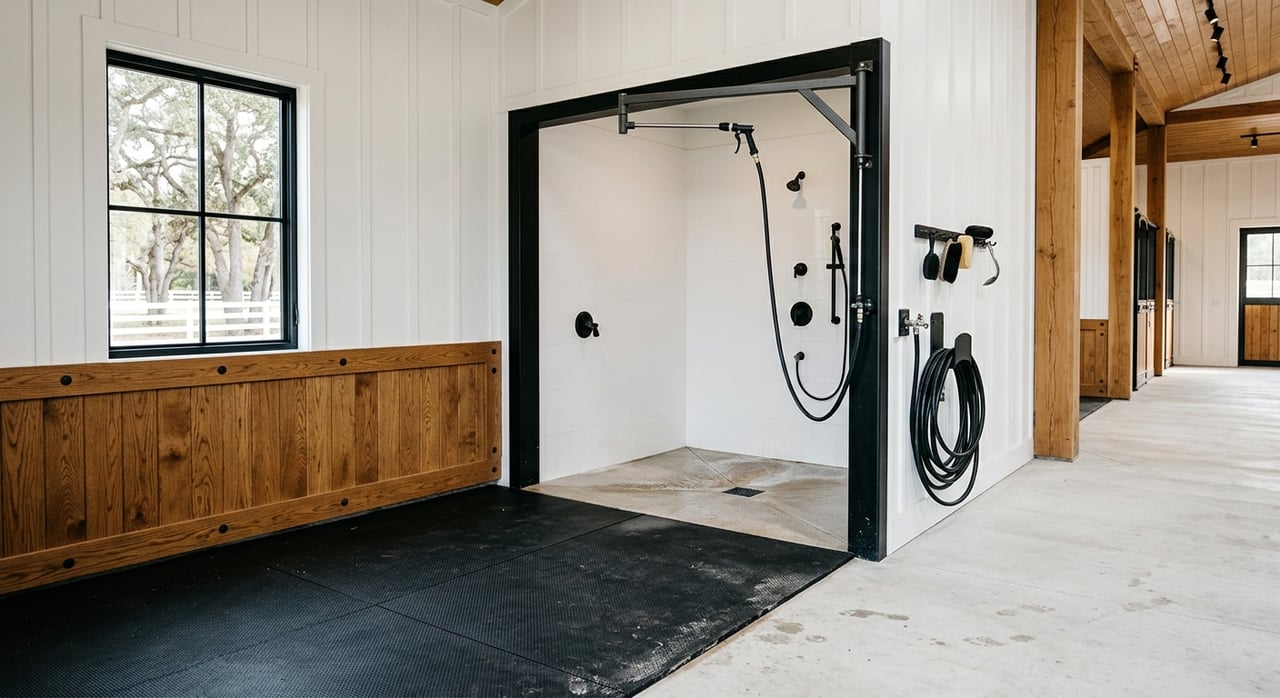
Assess stall sizes and ventilation, aisle width, tack and feed storage, wash stall access, and manure staging. Confirm electrical is safe and protected from moisture. If the parcel intersects a flood zone, compare barn floor elevation to the FEMA base flood elevation using your FEMA flood map. Pull permit records for any barn additions through the county permits portal and plan for a qualified barn and electrical inspection during your contingency.

Arena potential and drainage

Look for a reasonably flat, well-drained site with good truck access for base materials. North-south orientation is often preferred to minimize strong shadows, but follow the land’s micro-slope and wind for dust control. Confirm whether grading, fill, or covered structure plans will trigger permits or stormwater review through Marion County Building Safety.

Water supply, septic, and manure handling

Confirm well age, permits, and yield. Plan to test for bacteria and nitrates. For septic, identify the tank and drainfield footprint, system age, and capacity. Larger operations or parcels in springsheds may require advanced systems. Also check if the address falls in a septic-to-sewer project area and whether a connection will be required on a timeline. Review program details at Marion County Utilities. For manure, identify a dry, high storage site with truck access and appropriate setbacks from wells and waterways.

Soils, drainage, and wetlands

Soil type drives pasture performance, arena cost, and septic design. Use NRCS data to understand drainage and depth to seasonal high water. Marion County soils vary widely, from deep sands to poorly drained loams. Start with NRCS pedon and SSURGO references such as this representative Marion County soil profile, then confirm with on-site tests at your proposed barn and arena locations.

If you see depressional wetlands, ponds, or drainageways, any fill or significant grading may require permits. Before you plan earthwork, request a preliminary jurisdictional determination through the USACE Jacksonville District Regulatory Division.

Access, road maintenance, and emergency services

Confirm whether access is by county-maintained road or a private road or drive. Private roads often come with recorded maintenance agreements and cost sharing. Verify recorded easements and responsibilities in your title commitment and cross-check road type in the county GIS maps.

Ask about emergency response expectations for the address. Barns with hay storage or commercial activity may trigger additional fire-safety considerations. Plan adequate turnarounds for emergency vehicles and water access.

Neighboring land uses and nuisance risk

Scan adjacent parcels for large poultry or cattle operations, fertilizer or pesticide storage, or mining and hauling activity. These can affect odor, flies, or dust. Confirm zoning and any special permits nearby by reviewing county records and the applicable sections of the Land Development Code.

Permits and approvals to verify

  • Zoning and horse density. Confirm the parcel’s zoning, overlays, and horse-density limits in the Marion County LDC. This directly affects how many horses you can keep without special permissions.
  • Commercial boarding or lessons. Boarding for pay or riding academies often require a Special Use Permit or similar approval. Confirm with Growth Services and review any existing approvals in Civic Access via the county permits portal.
  • Building and stormwater permits. Barns, covered arenas, significant grading, and new electrical typically require permits. Check for prior approvals and open code cases through the county portal.
  • Septic and wells. Septic permitting is coordinated under Florida Department of Health rules with county enforcement. Parcels in springsheds or sewer project areas may face additional requirements. Start with local records and the county’s septic-to-sewer resources.
  • Wetlands and earthwork. Filling or grading in wetlands may require Section 404 coordination. Engage early with the USACE Jacksonville District.
  • Agricultural classification for property taxes. If you plan bona fide agricultural use such as hay production or a qualifying horse operation, confirm current status and deadlines with the Property Appraiser. Florida’s statute outlines timing and criteria; review Section 193.461 at the Florida Senate site.

Specialists to line up during your contingency

Build your inspection team early so you can move fast once under contract.

  • Boundary survey with easements and road or utility rights of way.
  • Structural barn inspection by an equine-savvy inspector or engineer, plus a licensed electrical inspection. Cross-check with the county permits portal.
  • Equine veterinarian facility review for stall sizes, wash areas, isolation options, and herd health flow.
  • Soil and geotechnical tests at proposed arena and barn pad locations. Use NRCS mapping to pick test points and verify with on-site borings. Reference a representative Marion County soil profile as a baseline.
  • Well yield test and lab water chemistry for bacteria and nitrates.
  • Licensed septic inspection, records check, and a plan for replacement or upgrade if needed.
  • Wetland delineation or a preliminary jurisdictional determination if mapping or site features indicate wetlands. Coordinate with the USACE Jacksonville District.
  • Fencing and paddock safety audit by a local equine facilities contractor.
  • Pasture and forage consultation with UF/IFAS based on your target stocking rate and soils. Review UF guidance on stocking rate and forages.

Quick tour checklist

Carry this list when you walk a farm.

  • Verify zoning and the horse-density limit in the LDC. Bring a printed copy of the relevant LDC section.
  • Confirm usable pasture acres versus total acres using your county GIS maps.
  • Photograph fences, gates, barn roof and wiring, wash and tack areas, manure staging, and arena drainage.
  • Ask the seller for well and septic permits, pump or service records, soil tests, and any hay production or boarding income history.
  • Note red flags like standing water in paddocks, recurring septic pumpouts, unpermitted barn additions, or inadequate electrical capacity.

Budget and timing realities to plan for

Two local realities can shift budgets and schedules:

  • Horse-density limits. If your headcount exceeds what zoning allows, you may need to reconfigure acreage, alter turnout plans, or pursue approvals. Confirm specifics in the Marion County LDC.
  • Septic-to-sewer projects. If your address is in a project area, a future connection may be mandatory within a set timeframe. This can add cost and coordination but may come with grant opportunities. Review program details at Marion County Utilities and factor it into your plan.

Buy with a local advocate

Horse farms are not one-size-fits-all. Zoning class, wetlands, soil type, and well or septic capacity are parcel-specific and can change feasibility. A detailed due diligence plan led by a local equestrian-focused agent helps you avoid missteps, budget accurately, and position your offer with confidence. If you want a guided, property-by-property approach backed by equine and construction insight, connect with Alyssa Pascucci for a private consultation.

FAQs

How many horses can I keep in Anthony under Marion County rules?

  • Marion County’s Land Development Code sets minimum pasture area and caps horse density in certain residential and rural districts at four horses per acre, with 9,000 square feet for the first horse and 6,000 square feet for each additional horse. Always confirm your parcel’s zoning and overlays in the LDC.

How do I check if a barn or arena on the property was properly permitted?

  • Search the county’s permitting and code records in Civic Access, then match permits to structures you see on site. Look for final inspections, and note any open violations so you can address them during negotiations.

What is a good rule of thumb for pasture acreage per horse in central Florida?

  • UF/IFAS suggests roughly 2 to 2.5 acres per mature horse on typical bahiagrass, and about 1 to 1.5 acres per horse for more productive bermudagrass or winter rotations, adjusted for soils and management. Pair this with the county’s horse-density rules for your zoning.

How can I tell if a property’s soils and drainage fit an arena build?

  • Use NRCS soil mapping to understand baseline drainage and depth to the seasonal high water table, then order on-site geotechnical tests at the proposed arena pad. Poorly drained soils or a shallow water table can increase construction costs.

Do I need permits if there are wetlands on or near the property?

  • If you plan any fill or earthwork that could affect wetlands or jurisdictional waters, you may need Section 404 coordination. Request a preliminary jurisdictional determination through the USACE Jacksonville District before you grade or place fill.

What should I verify about wells and septic on a horse farm?

  • Confirm well age, permits, and yield, and test water for bacteria and nitrates. For septic, locate the tank and drainfield, check records and system age, and confirm whether the address is in a septic-to-sewer project area that could require a future connection.

Work With Us

We bring a passion for equestrian living and years of real estate expertise to guide buyers, sellers, and investors with unmatched dedication. With a background in luxury markets, construction knowledge, and international experience, we understand the unique needs of every client. Based in Ocala’s Whispering Oaks Farm, we are ready to help you find your perfect property near the World Equestrian Center and beyond.